
How Sweepstakes Casinos Market Themselves: Celebrities and $275M Budgets
 Available in US
By early 2025, sweepstakes casino ads accounted for roughly half of all online casino advertising viewed in the United States. That number, from AGA and Sensor Tower data, tells you two things: how aggressively sweepstakes operators were using paid digital media, and why Google’s October 2025 policy change was such a significant inflection point. You can’t cut off advertising access to a category that represents half the online casino ad market without creating real disruption. This piece documents the marketing machine that built the sweepstakes casino audience to 38 million users, what’s changed since October 28, 2025, and what the industry’s current playbook looks like.
How Sweepstakes Casinos Spent Their Way to 38 Million Users
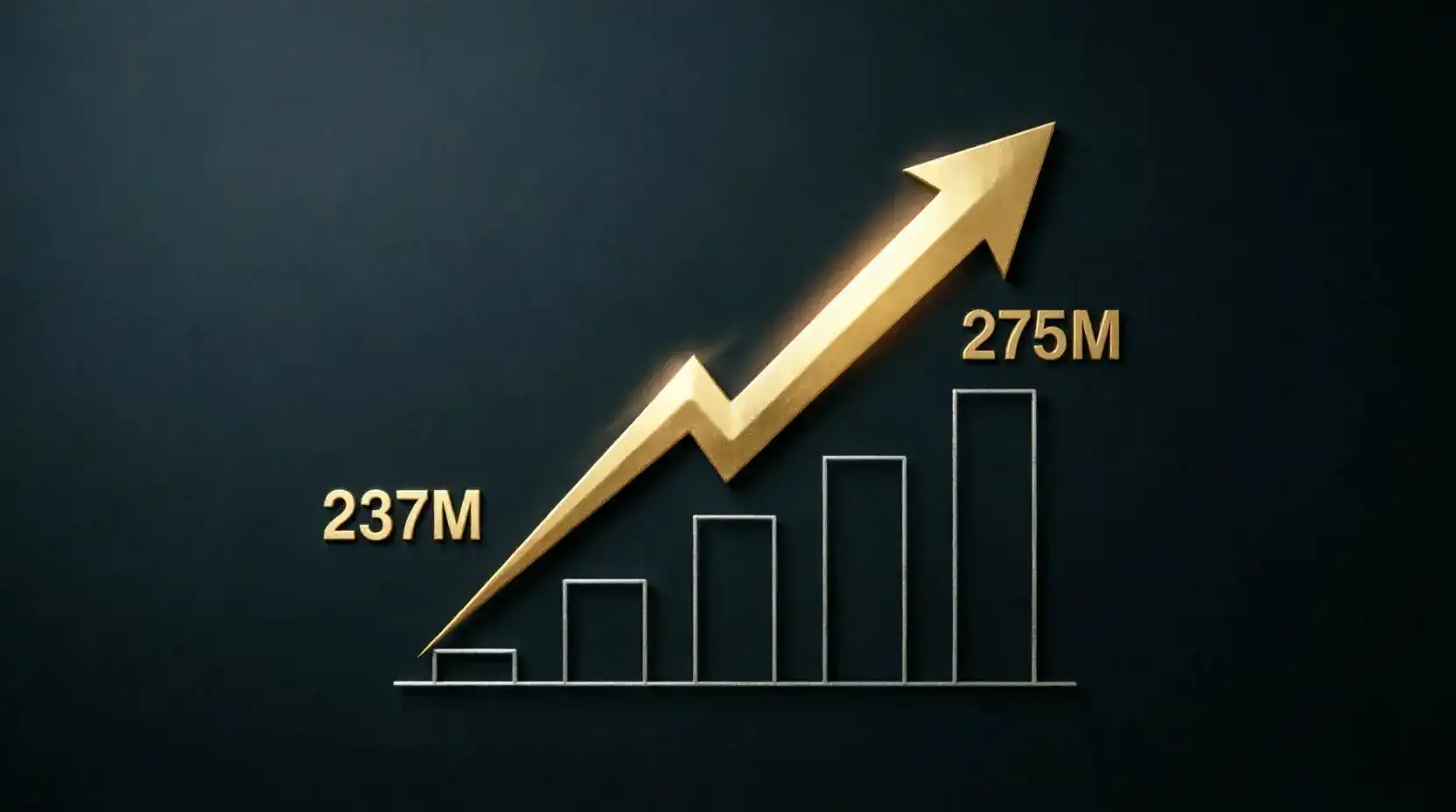
VGW’s marketing spend is the most concrete data point available on sweepstakes casino advertising budgets. At October 2025, VGW was spending $275 million annually on marketing — up from $237 million the prior period, a 16% increase. That’s the spend of a single operator. The broader market, with 140+ brands, was investing proportionally more. The aggregate sweepstakes casino marketing spend in the US in 2025 was likely north of $500 million annually across all operators, based on reasonable extrapolation from the VGW figures and the competitive intensity of the acquisition environment.
The channels that absorbed that spend before October 2025 were heavily digital. Google Ads — paid search and display — was the most efficient customer acquisition channel for sweepstakes casinos precisely because intent-based search advertising reached players actively looking for gaming entertainment. A player searching “sweepstakes casino” or “free casino games with prizes” on Google was already expressing interest; paid search delivered those players directly to platform registration pages. The AGA’s Sensor Tower data showing sweepstakes casinos as half of all online casino advertising reflects how comprehensively these operators had dominated the paid search and display landscape.
Social media advertising was the second major channel. Meta’s platforms — Facebook and Instagram — allowed sweepstakes casino operators to target audiences by demographic and behavioral profiles: age brackets that index toward gaming, followers of casino-adjacent content, users who had interacted with social casino game ads. The targeting precision of social advertising made it economically efficient, and the creative flexibility of the format allowed operators to run high-engagement video and image ads alongside the direct-response conversion ads that drove registrations.

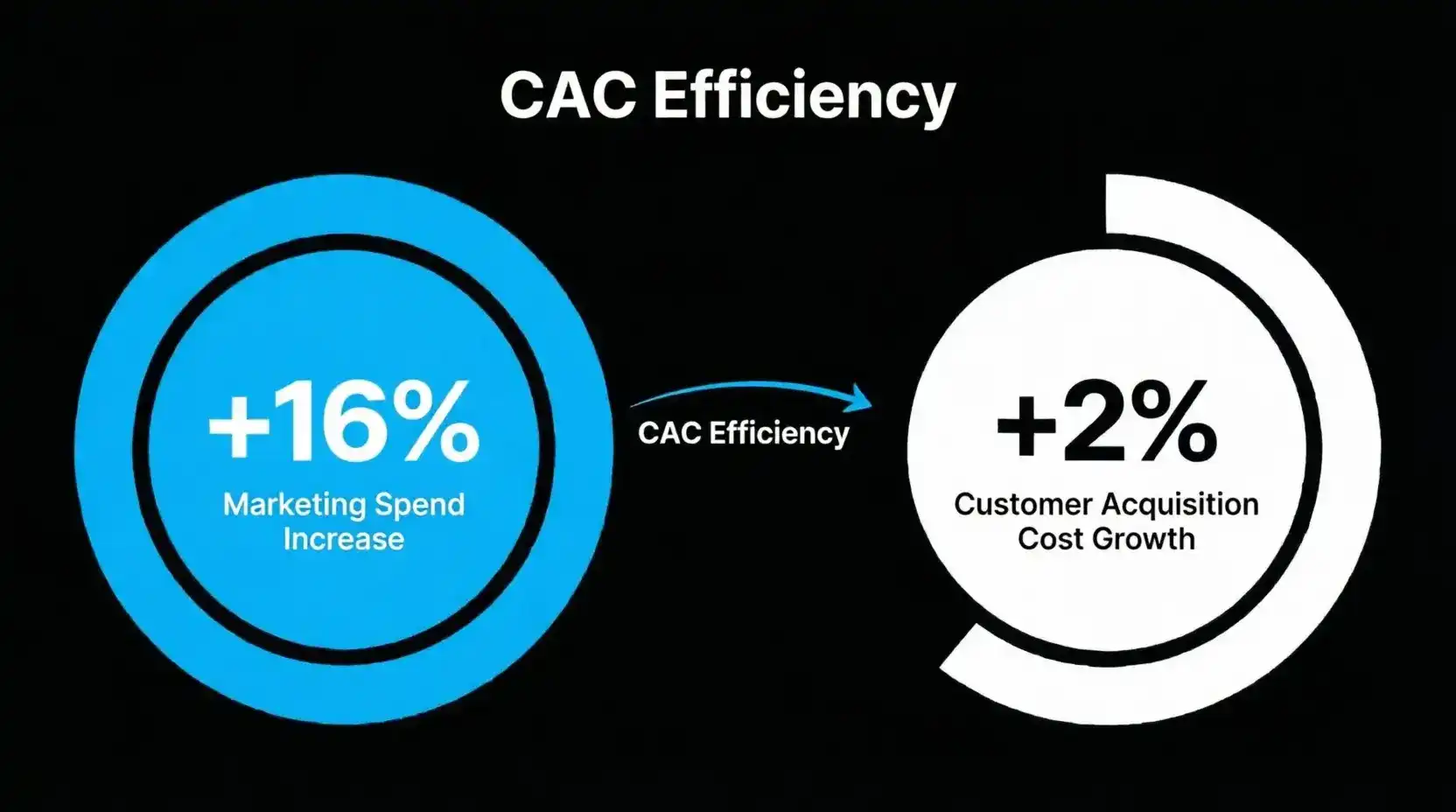
The efficiency metrics behind VGW’s spend are telling. Despite a 16% increase in marketing budget, VGW’s customer acquisition cost grew by only 2% year-over-year. That near-flat CAC in a growing market reflects either channel-level efficiency gains or the benefit of brand recognition effects — players returning to Chumba’s marketing touch points repeatedly before converting, amortizing the marketing cost over multiple impressions. Either way, the number suggests a well-optimized acquisition machine that was scaling without proportional cost inflation.
Celebrity Deals, Influencer Campaigns, and Affiliate Networks
Celebrity endorsements became a significant sweepstakes casino marketing strategy as the category scaled. The names associated with sweepstakes casino campaigns have included entertainment figures like Drake, Paris Hilton, and Ryan Seacrest in various capacities — brand ambassadors, promotional partners, or influencer-level participants in platform campaigns. These deals serve dual purposes: they generate awareness among the celebrity’s audience, and they create an implicit legitimacy signal for a category that many potential players are unfamiliar with or uncertain about.

The influencer marketing component of sweepstakes casino advertising expanded significantly in the 2023-2025 period, particularly on YouTube and TikTok. Gaming content creators with established audiences became natural distribution channels for sweepstakes casino awareness — their viewers already consume gaming content, and the sweepstakes casino format’s “play for free, win real prizes” positioning is genuinely compelling as an entertainment proposition when delivered through a trusted content creator. The disclosure requirements around influencer marketing for gaming-adjacent products have evolved, and operators with more robust compliance programs have adjusted their influencer contracts accordingly.

Affiliate networks represent the third major marketing channel for sweepstakes casinos. The affiliate model — where content publishers and comparison sites earn commission for driving verified registrations to platforms — has been central to the industry’s growth. The sweepstakes casino affiliate space grew substantially in the 2022-2025 period, with dedicated comparison sites, review platforms, and bonus-tracking resources building organic audiences around the category. These affiliates generate editorial content that ranks in organic search and drives registrations at minimal variable cost to operators.
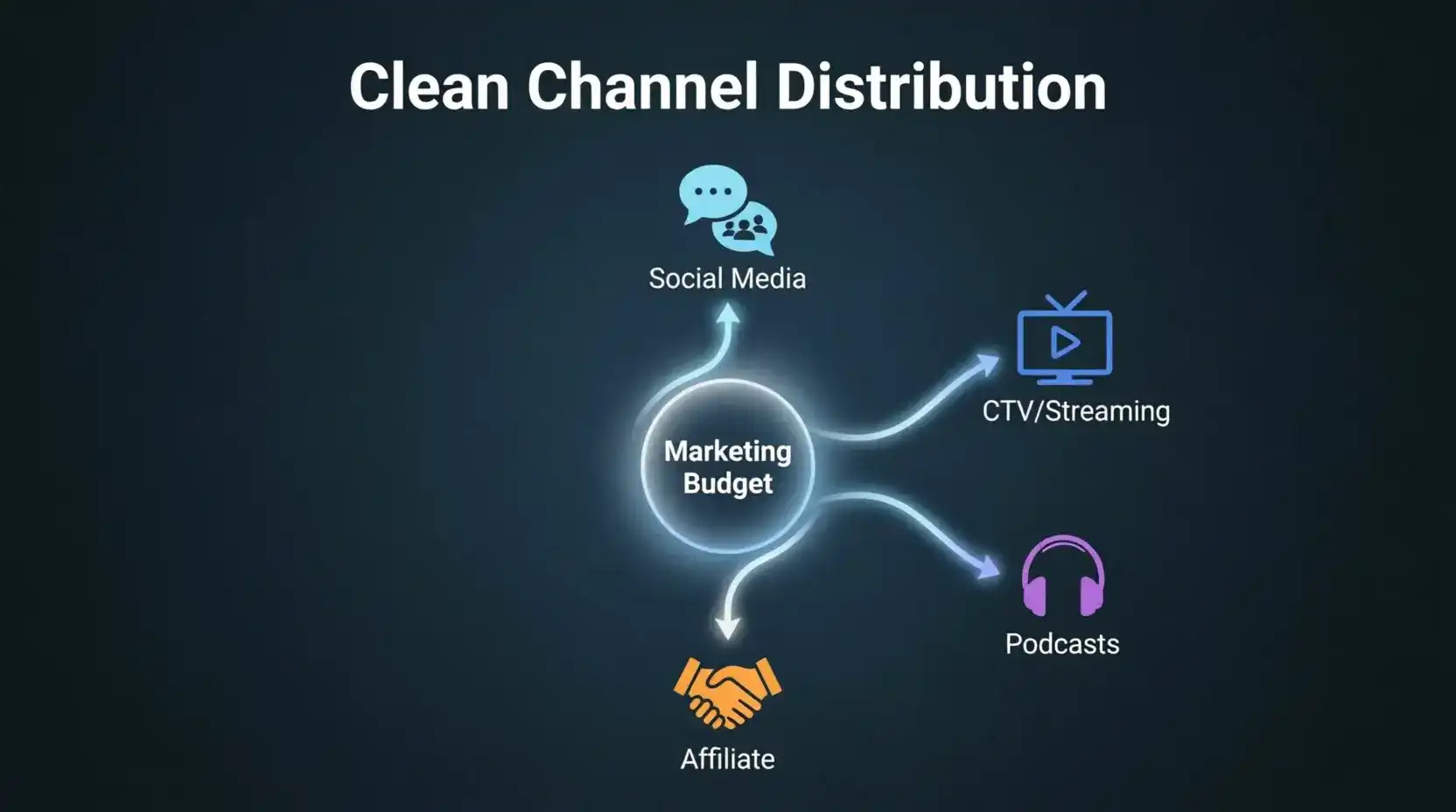
The Google Ads ban of October 2025 has redirected marketing investment rather than eliminated it. Operators have reallocated paid digital budgets toward Facebook and Instagram (which maintain different, though evolving, policies than Google), streaming video advertising on YouTube and connected TV, podcast advertising, and expanded affiliate program payouts. The $275 million that VGW was spending on marketing doesn’t disappear when one channel is cut off — it finds other channels. The post-Google era marketing landscape is more fragmented than the pre-Google era, which creates both higher operational overhead for operators and some opportunity for non-Google channels to benefit from the reallocation.
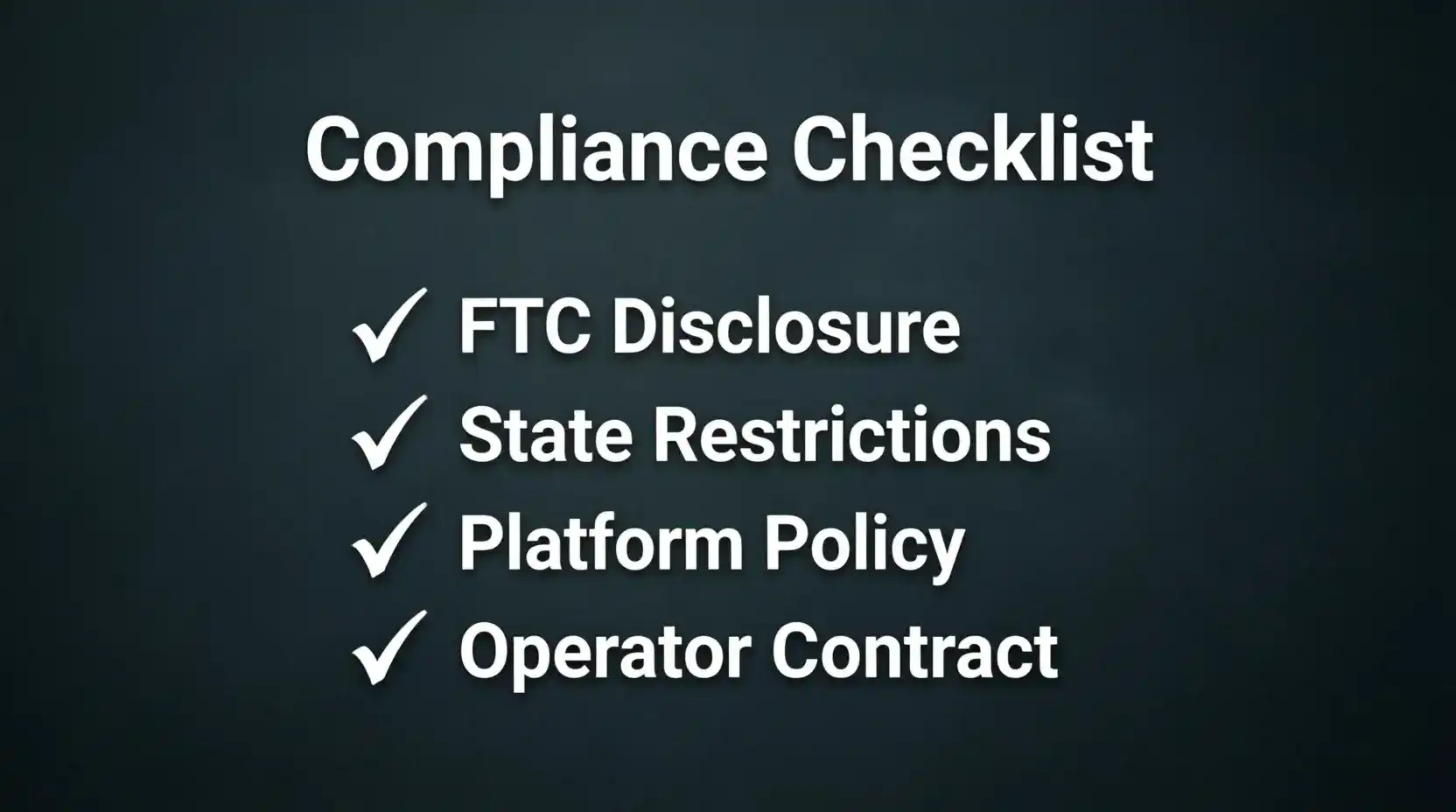
The disclosure compliance landscape for sweepstakes casino marketing has grown more complex in 2025-2026. The NY S5935A law’s explicit inclusion of marketing affiliates in its liability chain signals that state regulators are examining the full promotional ecosystem, not just platform operators. Influencer disclosure requirements under FTC guidelines, state-specific prohibitions on advertising to certain demographics, and the platform-level advertising policies at Meta and YouTube all create a compliance matrix that smaller operators struggle to navigate correctly. The larger, better-resourced operators — VGW, the Pulsz operator, WOW Vegas — have legal teams monitoring these requirements. Newer or smaller platforms often don’t, which is visible in how their influencer content handles (or fails to handle) required disclosures.
For players, the marketing landscape is mostly background noise — what matters is whether the platform operates well after you’ve been acquired, not how it found you. But understanding how sweepstakes casinos market themselves is useful context for evaluating why certain platforms appear prominently in search results, on YouTube, or in social feeds. The visibility of a platform in advertising doesn’t correlate with its operational quality; some of the most heavily marketed platforms in 2025-2026 were new entrants investing in acquisition before their operational infrastructure was fully built. For context on the legal landscape that shapes marketing compliance, the legal states guide documents where operators can market to US players in 2026.
The full picture is in our complete guide to US sweepstakes casinos.
The advertising rules changed in 2025: the Google ad ban.
Prepared by the SweepEdge editorial staff.