Google's Sweepstakes Casino Ad Ban: What Changed and Why It Matters
 Available in US
October 28, 2025 is a date that landed hard in the sweepstakes casino industry. That’s the day Google’s updated Gambling & Games advertising policy took effect, and it changed the rules of the market in a way that most industry observers had not anticipated. Sweepstakes casinos had been operating under Google’s “social casino games” certification framework, which allowed certified operators to advertise through Google Ads. The October 28 update removed sweepstakes casino platforms from the social casino games category entirely, stripping them of the ability to obtain or maintain Google advertising certification. The practical result: operators who had been running Google Ads campaigns found those campaigns cut off with no direct path to reinstatement.
What Exactly Changed in Google’s Gambling and Games Policy
Before October 28, sweepstakes casino platforms could apply for Google’s social casino games advertising certification. This certification allowed them to run paid search ads, display ads, and YouTube pre-roll campaigns targeting US users. The certification process required documentation of the platform’s sweepstakes structure, but it was achievable for established operators. By early 2025, sweepstakes casino ads accounted for roughly half of all online real-money casino advertising viewed by US users — a figure drawn from AGA and Sensor Tower data that illustrates how aggressively the category was using paid search and display.

The October 28 policy update redrew the category boundary. Google’s revised policy no longer recognizes sweepstakes casinos as a subcategory of social casino games. Instead, they fall under the gambling advertising category, which requires operators to hold real-money gambling licenses in the jurisdictions where ads are targeted. Since sweepstakes casinos explicitly do not hold gambling licenses — that’s a feature of their legal structure, not an oversight — they cannot satisfy the new certification requirements.

The policy change did not happen in isolation. It came against a backdrop of increasing regulatory pressure on sweepstakes casinos at the state level, documented concerns from the AGA about the platforms’ marketing practices, and a broader policy debate about whether search engines and social platforms should provide advertising infrastructure to platforms that operate outside the licensed gambling framework. Google’s decision effectively aligned its advertising policy with the regulatory position of states that have concluded sweepstakes casinos function as gambling operations.
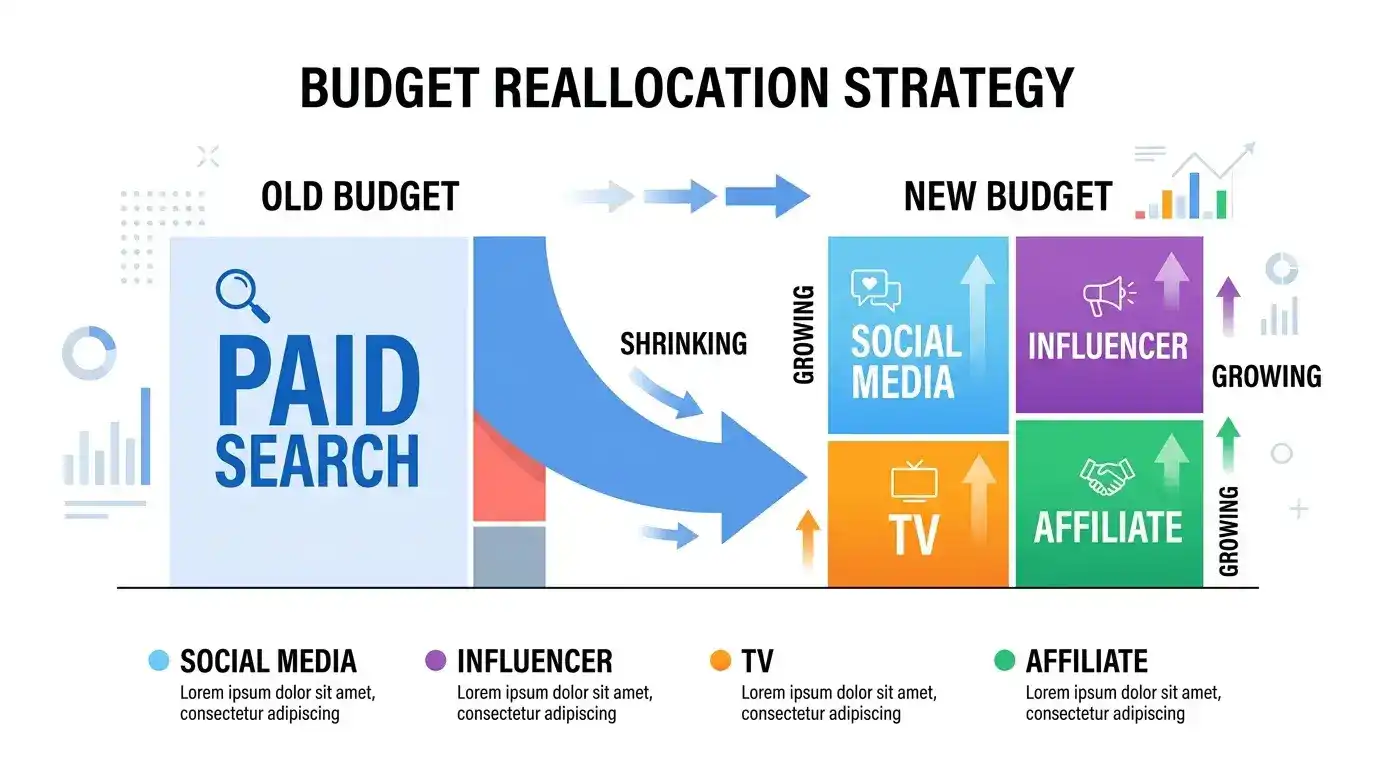
The financial stakes are significant. VGW was spending $275 million annually on marketing as of October 2025, up from $237 million the previous year — and that budget was paying for a customer acquisition machine that ran substantially through digital advertising. The loss of Google Ads access forced a reallocation of that spend toward channels that remain available: social media platforms, affiliate networks, email marketing, influencer campaigns, and television advertising. The fact that VGW’s customer acquisition cost grew by only 2% year-over-year despite the marketing spend increase suggests the pre-ban efficiency of Google’s targeting was already being complemented by diversified channels.
Impact on Affiliates, Operators, and Traffic Acquisition
The affiliate community that had built search traffic and paid advertising businesses around sweepstakes casino referrals took an immediate hit. Affiliate sites that were running Google Ads to drive traffic to sweepstakes casino offers lost their ability to run those campaigns directly. The organic search traffic that affiliates generate through editorial content was not affected by the policy change — Google’s content policies and organic search rankings are separate from its advertising certification requirements. But the paid amplification that many affiliates used to supplement organic traffic was cut off.

Operators with larger marketing budgets — the VGW-tier companies — could absorb the reallocation cost more easily than smaller platforms. The disruption was proportionally larger for newer or smaller operators who had leaned more heavily on Google’s advertising infrastructure as a cost-effective user acquisition channel before building out diverse traffic sources.
The platforms that have navigated the post-ban environment most effectively are those that had already invested in organic content, social media presence, and influencer relationships as primary traffic channels — treating paid search as a supplement rather than a backbone. The October 2025 change effectively validated that diversified approach.

For players rather than operators, the Google Ads ban has a more indirect but real consequence. The platforms most dependent on paid search advertising were disproportionately the newer, less-established operators who hadn’t yet built the organic search footprint and brand recognition that drove traffic to incumbents like Chumba and Pulsz. The loss of that advertising channel accelerates the consolidation of the market around operators with stronger organic and brand-direct traffic — which correlates, not coincidentally, with operators that have more robust operational infrastructure generally. A market with fewer Google Ads-dependent new entrants is, on balance, a market with slightly fewer platforms of uncertain reliability appearing at the top of search results.
The NY S5935A law’s liability chain — which extends penalties to marketing affiliates — adds another compliance layer for everyone in the ecosystem. Affiliates who were previously running Google Ads for sweepstakes casino offers now face both the advertising policy barrier and the legal exposure question in states with active enforcement. The combined effect has increased the compliance overhead for everyone in the affiliate and operator ecosystem, a cost that smaller operators feel more acutely.

The longer-term question is whether Google’s policy change represents a floor or a ceiling for platform-level advertising restrictions. The sweepstakes casino category has been on a trajectory of increasing advertising volume — by early 2025, sweepstakes casino ads accounted for roughly half of all online casino advertising viewed in the US, a figure that reflects years of aggressive paid media investment. The industry’s pivot to influencer marketing, TV advertising, and social media placements following the Google ban has already generated its own secondary debates about disclosure requirements and audience targeting on those channels. Platforms and affiliates operating in this space should expect continued policy evolution rather than a stable settled environment.
For players, the advertising landscape shift is mostly background noise. What matters practically is whether your preferred platform remains accessible in your state, continues processing redemptions reliably, and maintains its operational quality regardless of how its marketing budget is allocated. Those platform-level performance criteria are independent of whether the operator found players through Google Ads or a YouTube pre-roll or a celebrity endorsement deal. For the current state-by-state legal picture, the legal states guide documents where sweepstakes casinos can operate in 2026.
The full picture is in our complete guide to US sweepstakes casinos.
How operators reach players now: the marketing breakdown.
Published by the SweepEdge team.