
VGW Holdings: The Company Behind Chumba Casino and Half the Sweepstakes Market
 Available in US
Almost every sweepstakes casino article that mentions Chumba Casino mentions it as “a popular platform” and moves on. Almost none of them mention that Chumba’s parent company, VGW Holdings, generated A$7.3 billion in revenue in FY2025. That omission is significant because understanding VGW tells you more about how the sweepstakes casino market actually works than any amount of platform-level review. VGW is the closest thing the sweepstakes casino industry has to a publicly transparent operator — it files financial disclosures, its figures have been reported by financial media, and its corporate risk disclosures reveal what the company itself thinks about its regulatory exposure. Reading VGW tells you the industry’s real story.
VGW’s Portfolio: Chumba, LuckyLand Slots, and Global Poker
VGW Holdings operates three primary brands in the US sweepstakes market: Chumba Casino, LuckyLand Slots, and Global Poker. Each targets a distinct player segment within the broader sweepstakes audience.

Chumba Casino is VGW’s flagship and by far its largest revenue contributor. The platform targets the mainstream sweepstakes casino audience — players interested in casino-format games, primarily slots, seeking the entertainment and prize redemption experience that the sweepstakes format offers. Chumba’s proprietary game library is the largest in the sweepstakes market by title count, and the platform’s brand recognition in the US is unmatched. The A$5.2 billion ($3.7 billion USD) in revenue that Chumba generated in FY2025 represents approximately 71% of VGW’s total group revenue.
LuckyLand Slots targets a similar player profile but with a distinct visual identity — a Las Vegas-inspired aesthetic with game mechanics that overlap with Chumba’s library at some points but diverge at others. The brand serves as a second acquisition channel for players who might not respond to Chumba’s marketing but would engage with a different brand experience built on the same operational infrastructure. This is the sister-site model in its most functional form: two distinct customer-facing brands sharing a back-end platform, payment infrastructure, and regulatory compliance framework.
Global Poker is VGW’s answer to the sweepstakes poker market — a segment with different player demographics than casino-format games. The platform targets poker players who want a competitive online poker experience in states without licensed real-money poker. It uses the same SC/GC dual-currency structure but with poker-specific game formats. Global Poker has built a credible online poker community and competes against a different set of alternatives than Chumba does.
VGW Financial Performance FY2025: The Numbers
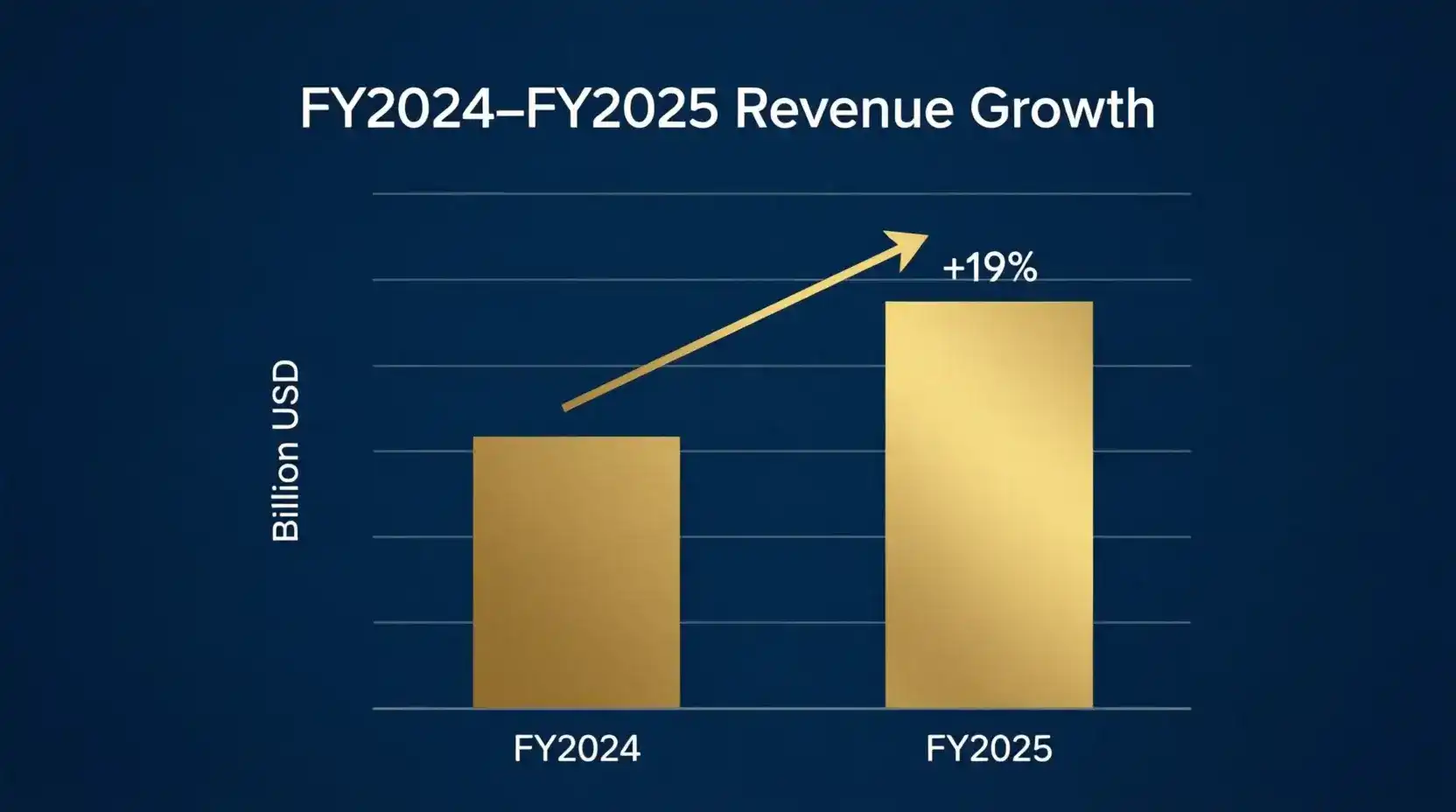
VGW’s FY2025 results are the most detailed publicly available financial data in the sweepstakes casino industry. Total group revenue of A$7.3 billion represents 19% year-over-year growth. Net profit grew faster — 33.5% to A$656 million — reflecting operating leverage as the business scaled. These are not small-company numbers: VGW is, by revenue, a more significant gaming company than many licensed casino operators in regulated US states.
The prize payout data is the most player-relevant financial figure: VGW paid out $2.83 billion in prizes in FY2023-24, up from $2.2 billion the prior year. That trajectory confirms that as platform revenue grows, prize payouts grow proportionally — the ratio of prizes paid to revenue is consistent, which reflects the sweepstakes model’s structural payout coefficient of approximately 68-72%.

VGW’s marketing expenditure at October 2025 was running at $275 million annually, up from $237 million the prior period. The important detail in this number is the customer acquisition cost implication: despite the increase in marketing spend, VGW reported that its cost per acquired customer grew by only 2% year-over-year. That efficiency — spending 16% more on marketing while keeping CAC nearly flat — reflects either improved marketing channel efficiency or the benefits of the brand recognition that Chumba’s market presence generates.
VGW’s Market Share Erosion and Strategic Response
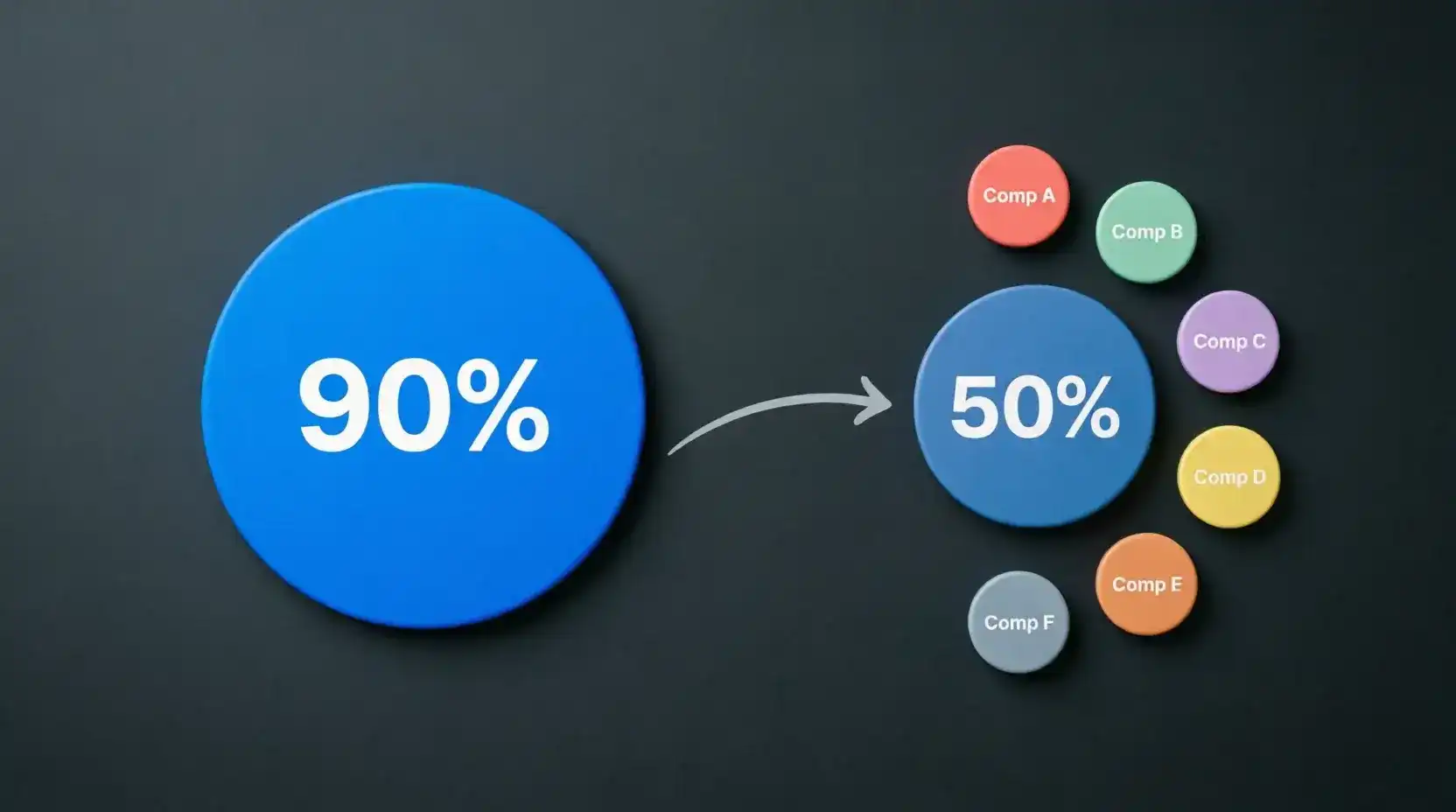
VGW’s market share story is the most significant competitive development in the sweepstakes casino market over the past three years. From a position of controlling above 90% of the US sweepstakes market, VGW’s share has declined to approximately 50% as of 2025. The decline is not a sign of VGW shrinking — its revenue grew 19% in FY2025 — but of the overall market growing faster than VGW’s own expansion rate. Over 140 platforms now compete in the US market, and 25+ new brands launched in 2025 alone.
VGW’s own annual report captures the strategic tension directly. The document warns that regulatory exposure in the US could “substantially adversely affect” its core operations and viability — an unusually frank disclosure that reflects how seriously VGW’s management takes the state-level ban wave. The Canada exit in August 2025 — where VGW proactively withdrew from the Canadian market — is the clearest strategic signal of how the company manages regulatory risk: exit before forced exit. The same logic applied to its domicile transfer from Australia to Guernsey, structuring the corporate entity in a jurisdiction with more accommodating regulatory parameters.
VGW’s strategic response to market share erosion has been to continue the marketing investment that built its position — $275 million in annual spend — while diversifying its user base through LuckyLand and Global Poker alongside Chumba. The company’s ability to sustain 33.5% profit growth even while its relative market share declined tells you something specific about the underlying economics: VGW’s operational leverage is strong enough that growing the market benefits the company even when its share of that market is declining. A 50% share of a $14 billion market is a larger absolute revenue base than a 90% share of a $3 billion market was three years earlier.

The competitive challenge VGW faces is structural: it has a proprietary game development model that served it well when it was the only serious player in the market, but that model doesn’t scale to serve the multi-provider demand that a broader, more demanding player base requires. Competitors who aggregate third-party content can expand their game libraries faster and more cheaply than VGW can develop proprietary titles. Whether VGW will respond by licensing third-party content alongside its proprietary library is one of the more interesting strategic questions in the sweepstakes market heading into 2027. For a detailed look at the Chumba platform specifically, the Chumba Casino review covers the player experience in depth.
The full picture is in our complete guide to US sweepstakes casinos.
Its flagship brand is reviewed in the Chumba Casino review.
Prepared by the SweepEdge editorial staff.