
Sweepstakes Casino Taxes in the USA: IRS Rules, 1099-MISC, and What You Owe
 Available in US
Sweepstakes casinos are not legally classified as gambling under US federal law — but the IRS classifies your redemptions as income regardless. That distinction catches players off guard in a specific and expensive way: they understand they’re not technically gambling, so they assume the tax treatment is also different. It isn’t. When you redeem Sweeps Coins for cash prizes, the IRS treats that as taxable prize income under federal law, subject to the same reporting obligations as any other prize or award. This piece covers exactly what those obligations are, when a platform issues you a form, and how to handle it correctly. This is informational, not legal advice — consult a tax professional for your specific situation.
The $600 Threshold: When You’ll Receive an IRS Form 1099-MISC
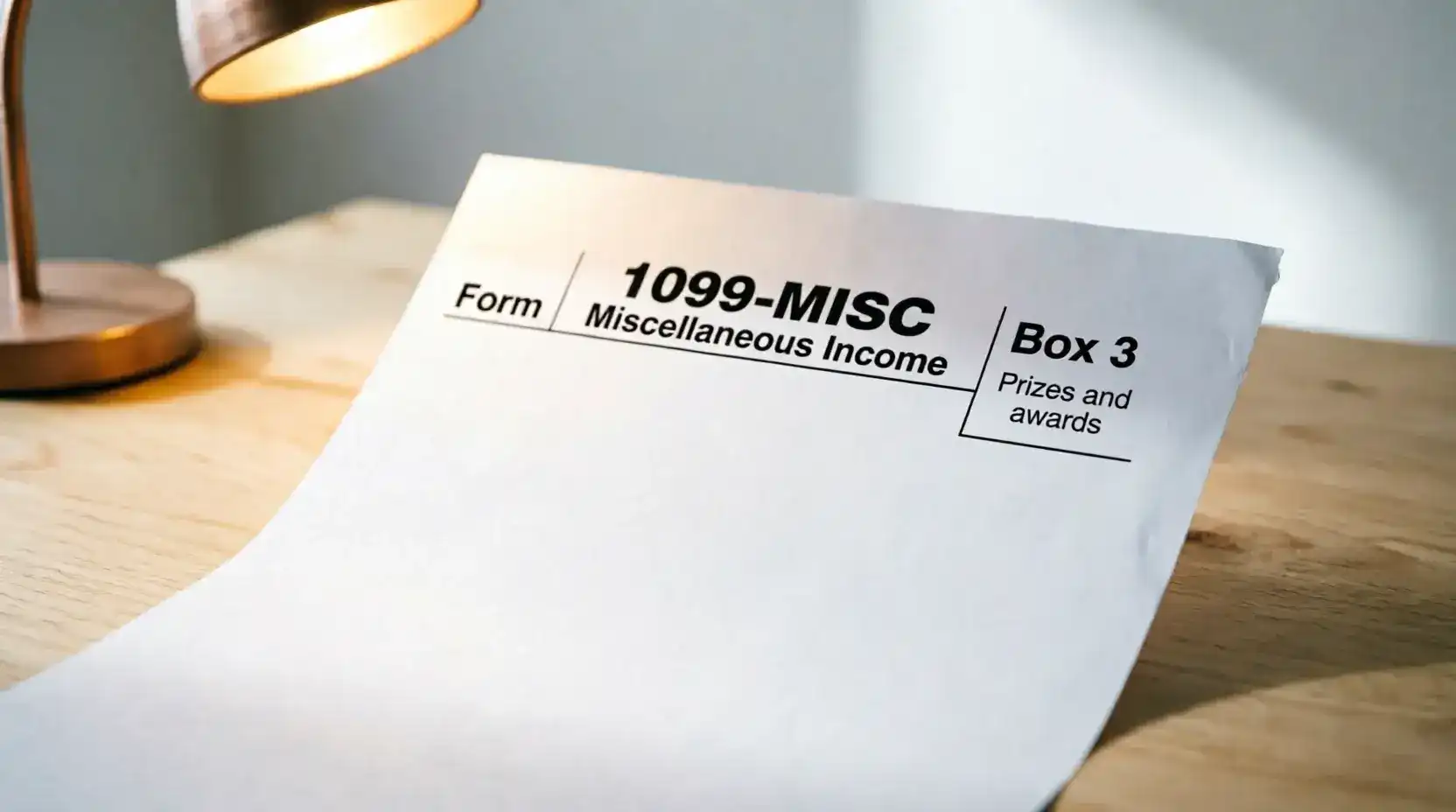
The number that determines your reporting obligation is $600. When your cumulative prize redemptions from a single sweepstakes casino platform exceed $600 in a calendar year, that platform is required to issue you an IRS Form 1099-MISC documenting the total. This is the same threshold that applies to freelance income, prizes from contests, and other non-employment income under federal tax law.
The 2026 redemption standard puts the mechanics of reaching this threshold in concrete terms. At 1 SC = $1 and a 50 SC minimum redemption floor, a single redemption of 50 SC represents $50. Reaching $600 in cumulative redemptions therefore requires approximately 12 full-minimum redemptions or some combination of larger redemptions totaling $600. For active players who are consistently accumulating and redeeming SC, crossing this threshold in a calendar year is not unusual.
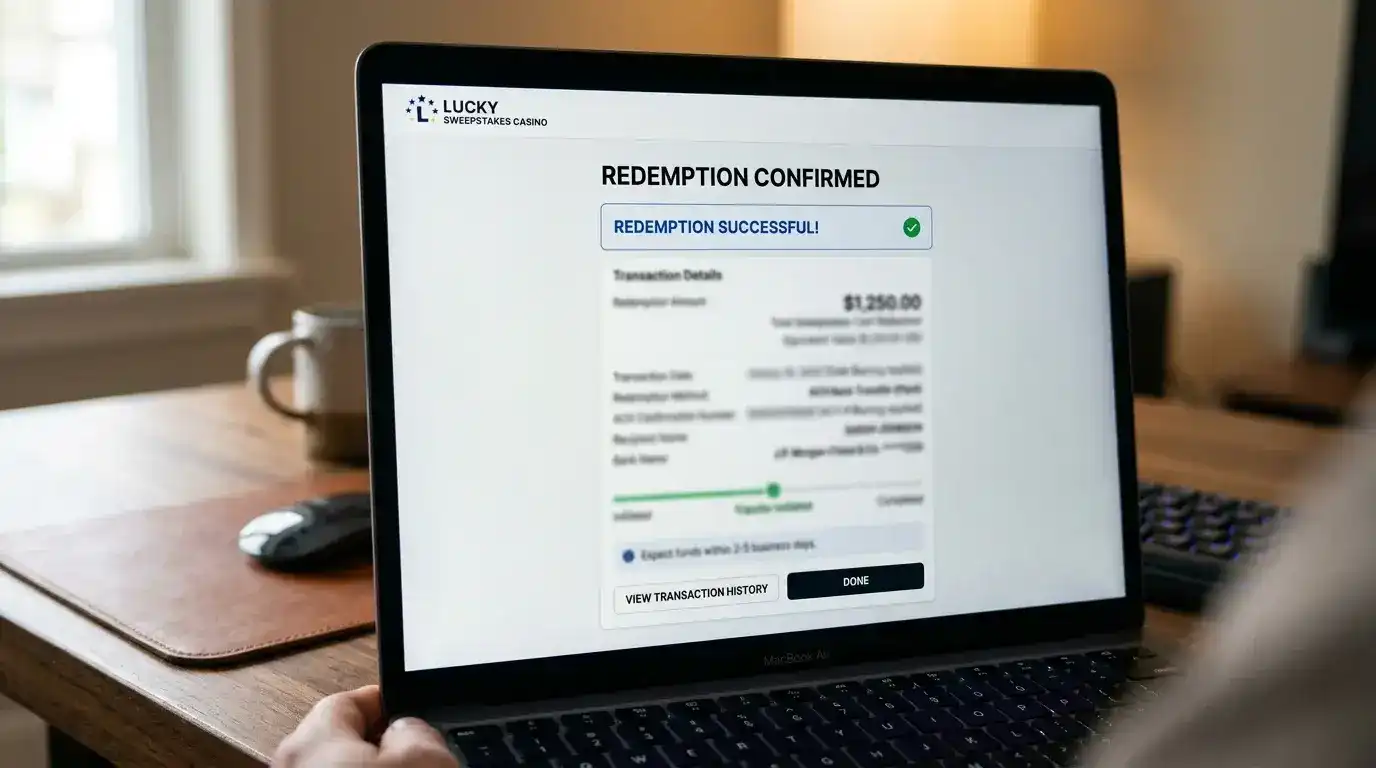
What triggers the 1099-MISC is the amount you receive from the platform — not the amount you “won” net of any Gold Coin purchases. If you spent $400 on Gold Coin packages during the year and received $700 in SC redemptions, the platform reports $700 on the 1099-MISC. The offsetting cost of your GC purchases may be deductible as a cost basis against the prize income, but that calculation is complex and platform-specific, and it’s the kind of question that genuinely warrants a conversation with a tax professional rather than a DIY calculation.
The 2026 industry standard, as documented in platform terms across established operators, is that platforms will issue 1099-MISC forms automatically when the $600 threshold is reached. You should receive the form by January 31 of the following tax year. If you believe you crossed the threshold but did not receive a form, the platform’s customer support can provide documentation of your redemption history for your records. The forecasted redemption volume for 2026 — with total SC redemptions across the US market projected in the $8.5-9.5 billion range — means tens of millions of individual player redemptions are being processed, and the IRS reporting infrastructure around these transactions has become more systematized.

What Counts as Taxable Sweepstakes Income?
The short answer is: cash prize redemptions. When you convert SC to cash and receive that cash through ACH, Skrill, or any other payout method, that amount is taxable income in the year received. Gift card redemptions are also prize income at their face value — a $100 gift card is $100 of taxable income regardless of how you obtained the SC used to acquire it.
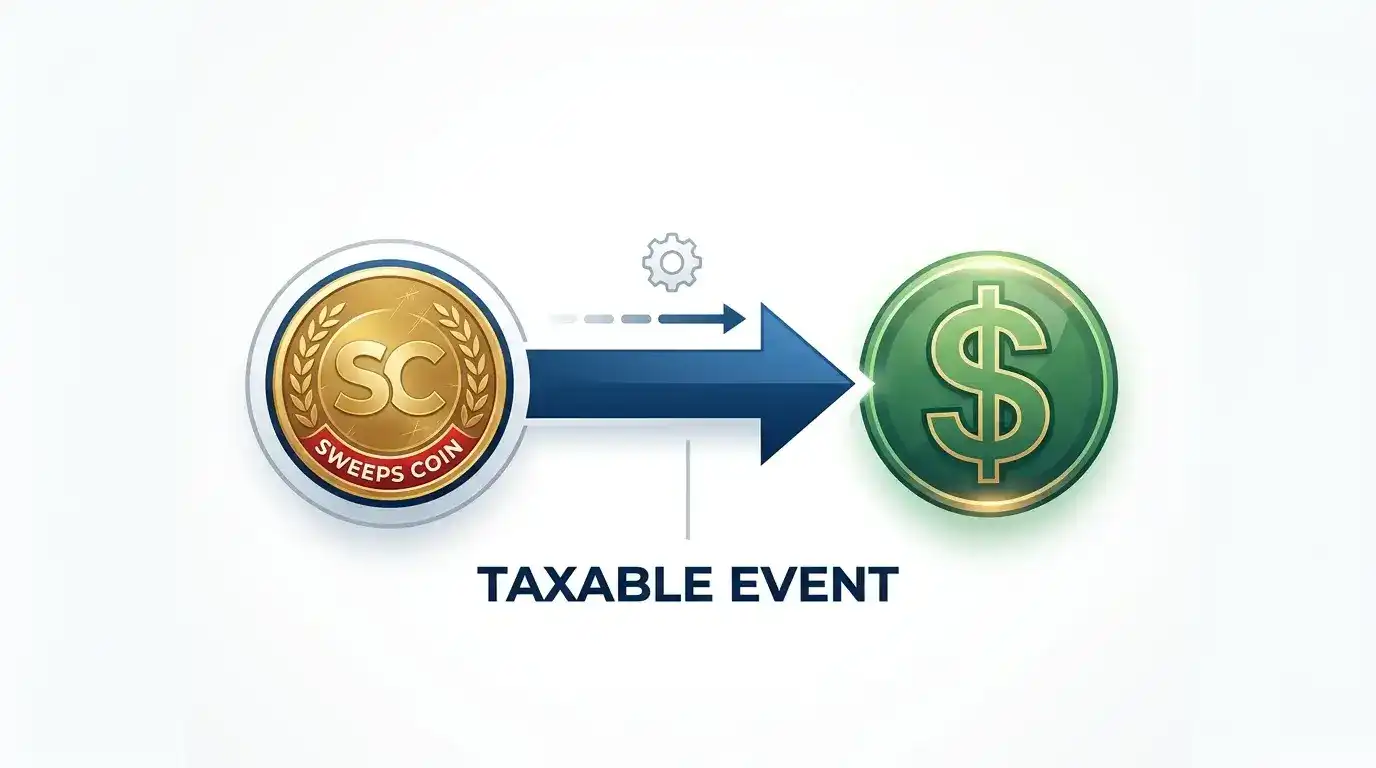
Gold Coins are not taxable. GC has no redemption value and represents a play-for-fun currency — receiving or spending GC has no tax consequence. The taxable event occurs when SC is converted to a cash-equivalent prize.
SC that you accumulate but have not yet redeemed is also not taxable. Tax liability crystallizes at the point of redemption, not at the point of earning. If you accumulate 200 SC over the course of the year but only redeem 50 SC before December 31, your taxable prize income for that year is $50, not $200. The unredeemed SC balance is carried into the following year and becomes taxable when eventually redeemed.
For players who receive multiple small redemptions throughout the year, tracking cumulative totals by platform is important. Because the $600 threshold applies per platform, it’s possible to receive reportable income from multiple platforms in the same year — each threshold is evaluated independently. Keep records of your redemption confirmations from each platform throughout the year.
How to Report Sweepstakes Casino Winnings on Your Tax Return
SC prize redemptions are reported as “Other income” on your federal tax return, regardless of whether you receive a 1099-MISC. The $600 threshold is the point at which the platform is required to report to the IRS — your obligation to report the income exists even if the platform does not issue a form (for instance, if your total redemptions from a platform fell between $1 and $599).
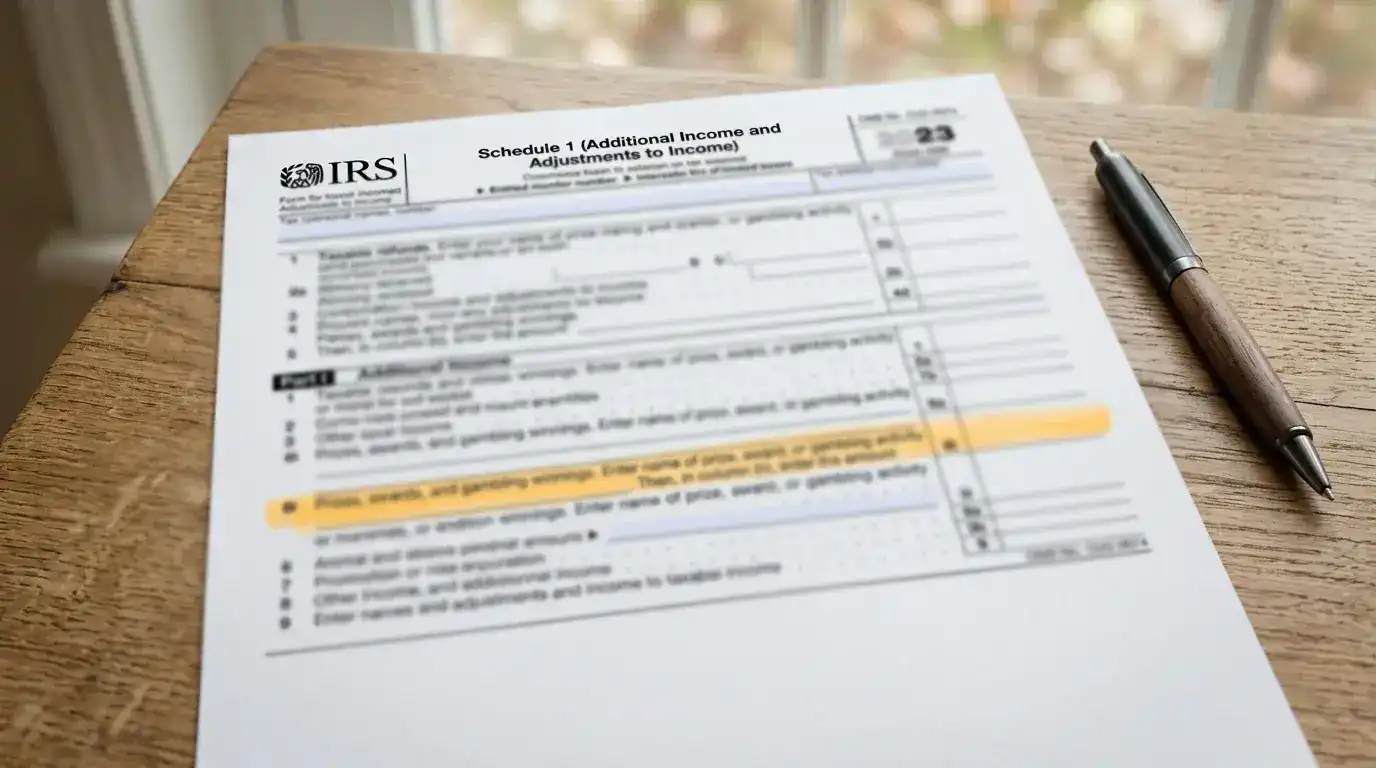
The relevant section of your federal return for reporting prize income depends on whether you’re filing Form 1040 with Schedule 1 (Additional Income and Adjustments) or using a simplified form. The IRS instructions for Schedule 1 include a line for prize and award income that is the correct location for sweepstakes redemptions. The amount to report is the gross redemption value — $1 per SC redeemed.
Howard Glaser of Light & Wonder has framed the operator-level concern about sweepstakes casinos in stark terms — describing the business model as one that allows operators to “evade licensing, provide no player protections, and siphon revenue from states.” The IRS’s tax treatment of player redemptions is one dimension of the regulatory framework that applies regardless of how the operator characterizes its legal status. From the government’s perspective, you received prize income and it should be reported.
State income tax obligations vary. Most states that have not banned sweepstakes casinos treat prize income consistently with federal treatment — it’s ordinary income subject to state income tax at your marginal rate. States that have banned sweepstakes casinos entirely may have additional complexity if you received redemptions before the ban took effect. Again, this is an area where platform-specific advice from a tax professional is worth the cost. The full payout mechanics and redemption processes are documented in the sweepstakes casino payout guide.

The full picture is in our complete guide to US sweepstakes casinos.
Tax follows the cash-out: how redemption works.
Published by the SweepEdge team.