Sweepstakes Casino for Beginners: Your First-Week Playbook
 Available in US
The thing that confuses most first-time sweepstakes casino players is that the model doesn’t work the way casinos they’ve heard about work. There’s no bankroll at risk. There are no deposits in the conventional sense. And the currency you play with comes in two flavors that do fundamentally different things. Once those three points click, the rest falls into place quickly — the mechanics are actually simpler than they sound when you’re reading about them for the first time. This is the guide I wish I’d had nine years ago when I first started analyzing these platforms.
Steps 1-5: How to Register, Get Free Coins, and Make Your First Redemption
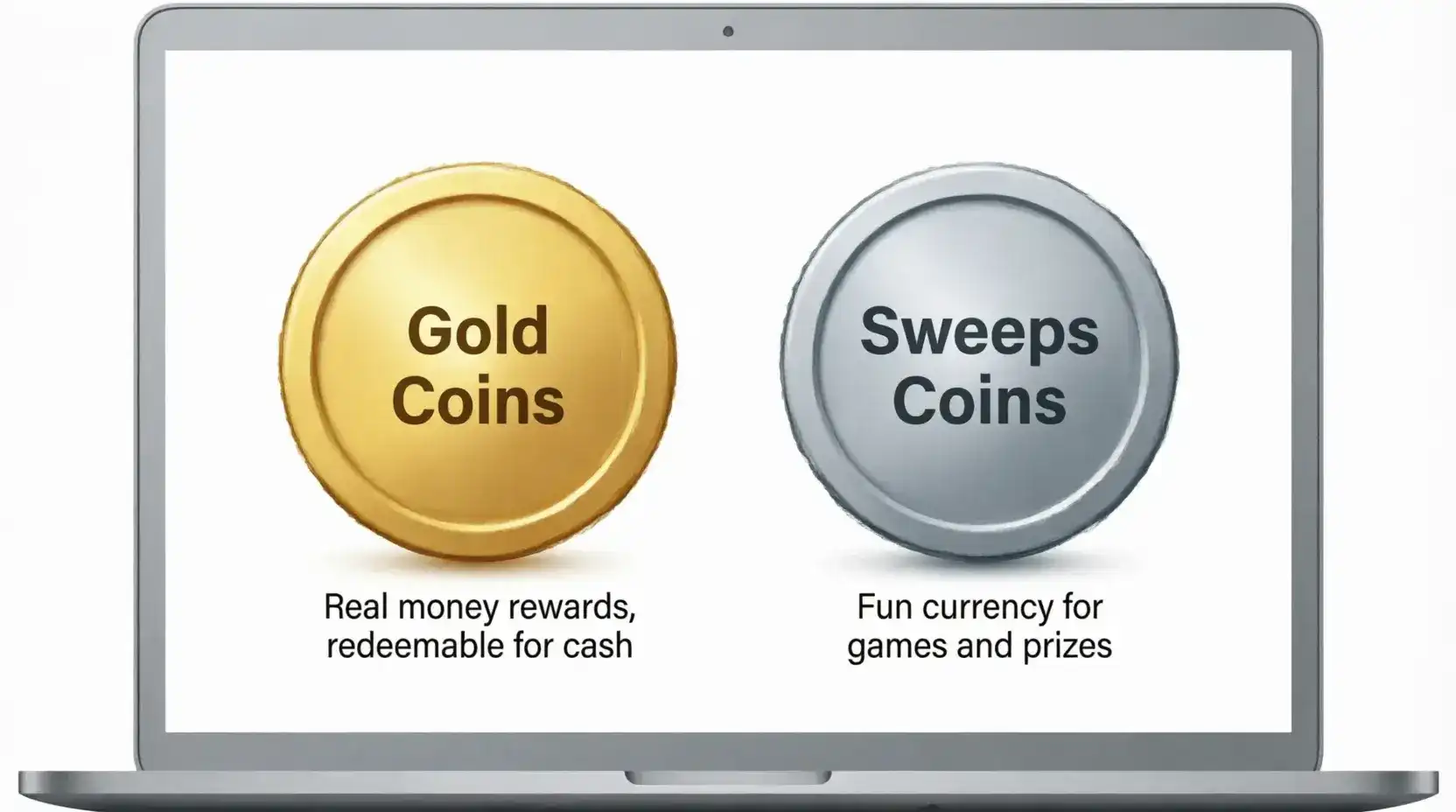
The structural framework you need to understand before anything else: sweepstakes casinos operate on a dual-currency model. Gold Coins (GC) are a play-for-fun currency — you can buy them, you receive them free as part of packages and daily bonuses, and you play games with them. They have no redemption value. Sweeps Coins (SC) are the currency that matters for actual prizes. Only 1-5% of users ever spend real money at sweepstakes casinos — the rest accumulate SC through free channels and play with those. Every legitimate platform is legally required to make SC available without any purchase. The minimum SC required for a cash redemption is typically 50 SC, which equals $50 under the 2026 standard of 1 SC = $1.
Step 1 is picking your first platform. For a first-timer, I recommend starting with one of the established platforms rather than a new launch. Chumba, Pulsz, or LuckyLand Slots all have multi-year track records of functional payout processing and documented operational stability. The platform that introduced you to sweepstakes casinos doesn’t need to be your permanent home — you’ll likely end up with accounts at two or three platforms once you’re comfortable with the format. But starting with a platform that has a known history reduces the variables you’re managing as you learn the system.
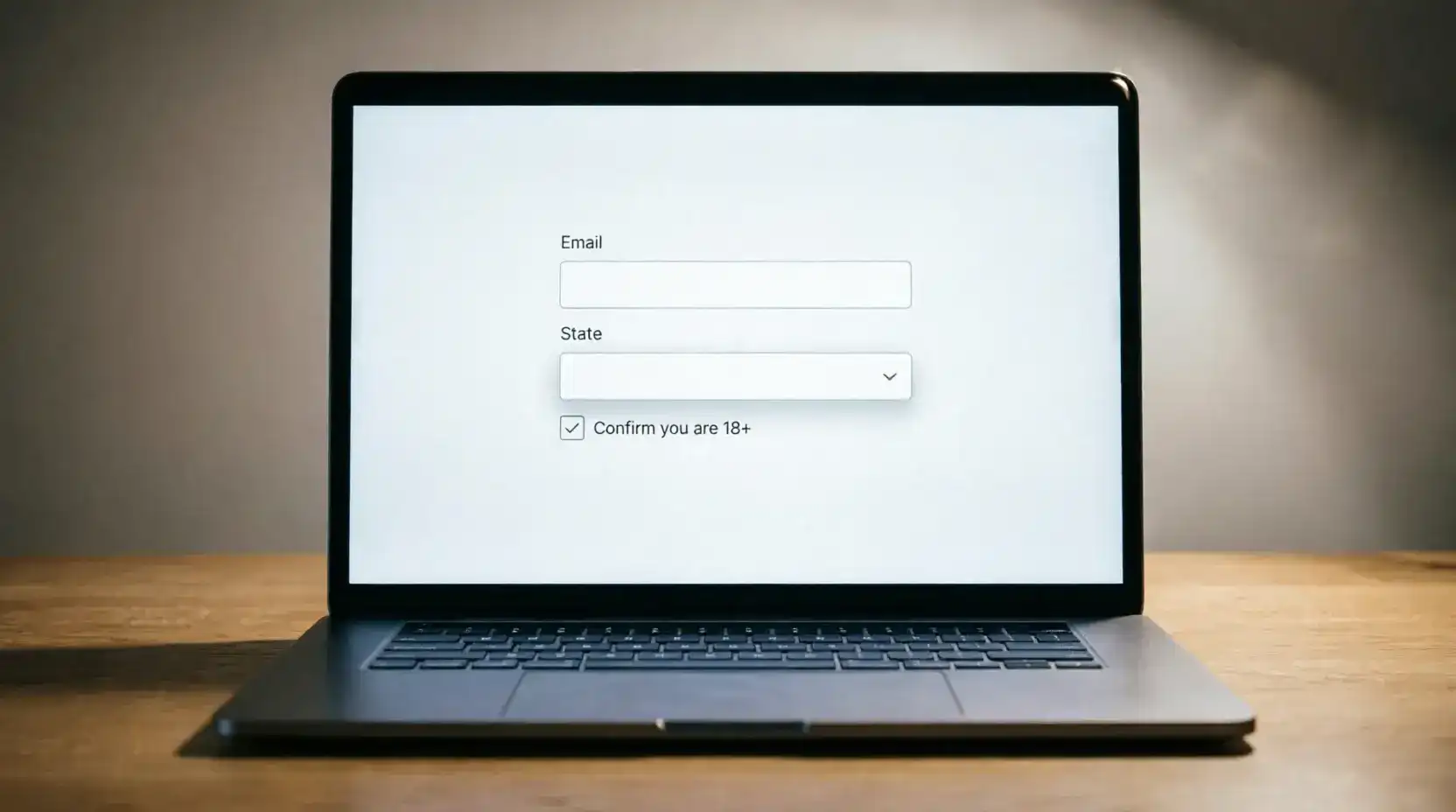
Step 2 is registration. You’ll need a valid email address, a US address in an eligible state (sweepstakes casinos are banned in 13 states as of 2026 — confirm yours is not on the list), and to be 18 or older. The process takes about three minutes. After verifying your email, your account is created and the registration bonus — SC and GC together — should appear in your balance within minutes. Do not skip the email verification step; it’s required for SC eligibility at virtually every platform.
Step 3 is understanding your starting balance. Your registration bonus will include both GC and SC. The GC is for practice — use it to learn how games work without any stake involved. The SC is what you’ll eventually redeem. Most beginners make the mistake of treating both currencies as equivalent, playing their SC immediately on high-volatility games before understanding the redemption minimum. The 50 SC threshold means you need to accumulate SC, not just play it.
Step 4 is establishing your daily habit. Log in every day. Every active platform provides a daily login bonus that delivers both GC and SC. The SC component typically runs 0.3-1.0 SC per day. Over 60-90 days of consistent daily logins, plus your registration bonus, this accumulates toward the 50 SC redemption threshold — and at platforms with more generous daily bonuses, you can reach it faster. This is the free-play route to your first redemption, and it works at every legitimate platform.
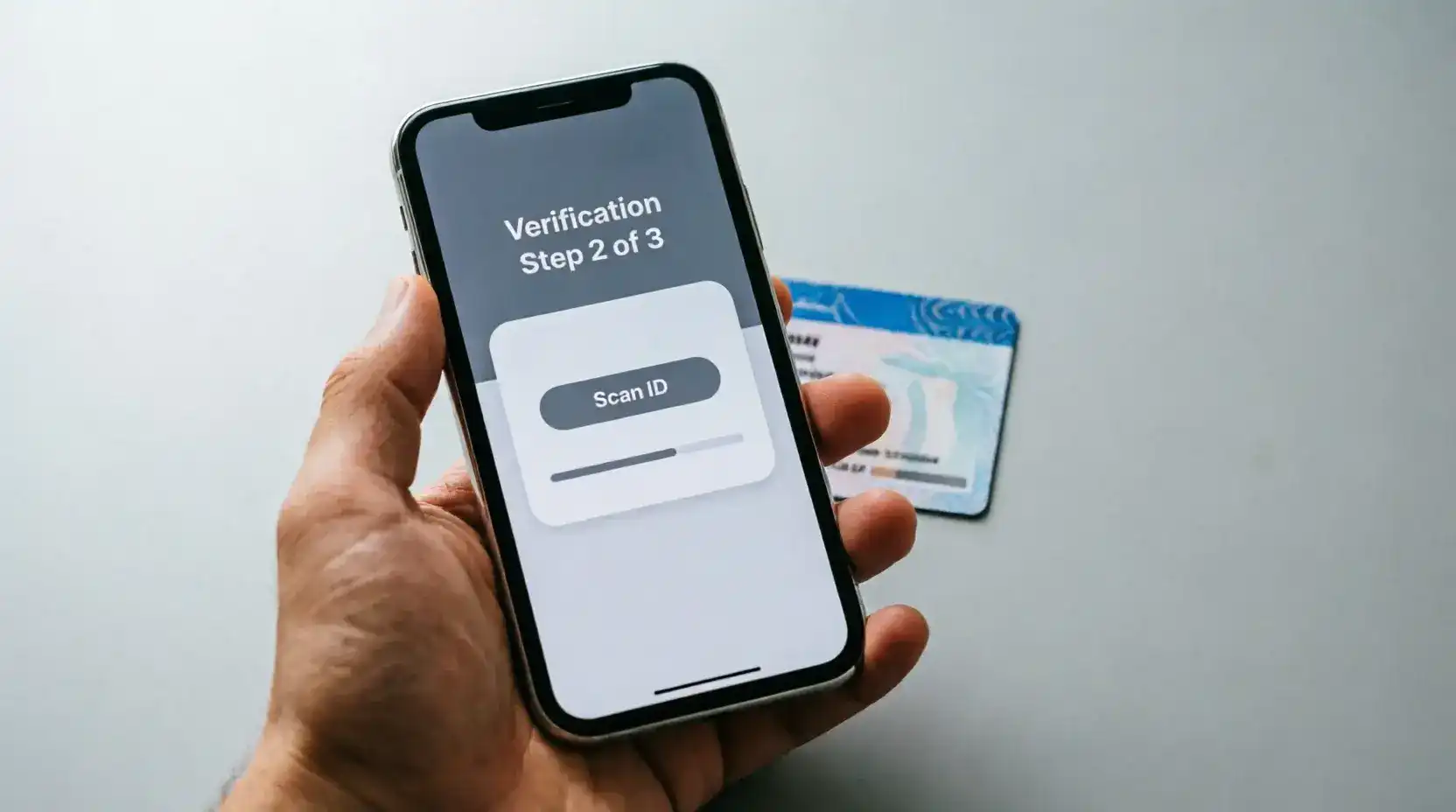
Step 5 is the KYC verification process. Before you can redeem SC for real cash, every platform will require identity verification — government-issued ID and proof of address are standard. Start this process before you need it. The verification typically takes 1-5 business days. If you wait until you hit 50 SC to start verification, that delay pushes back your first redemption unnecessarily. Initiate KYC as soon as your account is established and you’re confident you’ll be using the platform.
Five Beginner Mistakes to Avoid at Sweepstakes Casinos
The first mistake is playing SC on high-volatility games before reaching the redemption minimum. If you have 20 SC and play a high-variance slot, you can easily lose all of it in a short session. SC management — treating your SC balance as something to grow, not to risk — is the orientation that gets you to your first redemption. More than 70% of Americans check reviews before installing new apps, which suggests players are already cautious about new platforms. Apply that caution to how you manage your SC balance too.

The second mistake is creating accounts at platforms operating in states where sweepstakes casinos are restricted. If you’re in Michigan, Idaho, Nevada, Montana, Washington, Kentucky, or several other states with active bans, you need to know this before investing time in a platform that will block you at the KYC stage. Check your state’s legal status before registering anywhere.
The third mistake is not reading bonus terms. A registration bonus of 5 SC with a 5x playthrough requirement means you need to wager 25 SC total before that bonus becomes redeemable. For a player starting at 5 SC, that’s a meaningful hurdle. Platforms with 1x or no playthrough requirements on registration SC are more beginner-friendly.
The fourth mistake is using the same payment method for multiple platforms if you’re making GC purchases. Different platforms may trigger separate payment processor reviews for gambling-adjacent transactions, and spreading purchases across multiple platforms on the same card can occasionally trigger fraud flags. This is a minor practical point but worth knowing before you start purchasing on multiple platforms simultaneously.
The fifth mistake is not using the AMOE mail-in option. It takes effort, but it’s a real, functional way to receive free SC at every eligible platform. If you’re committed to the free-play route, supplementing your daily login SC with the occasional AMOE submission accelerates your accumulation. The full details of how AMOE works are in the how sweepstakes casinos work guide.
The full picture is in our complete guide to US sweepstakes casinos.
The free coins to collect first are in the no-deposit list.
Articles
Best Sweepstakes Casinos USA
Every week, someone asks me the same question: which sweepstakes casino is actually worth your time? I’ve spent nine years tracking this market, and the honest answer is that most…
Sweepstakes Casino Marketing
By early 2025, sweepstakes casino ads accounted for roughly half of all…
US Sweepstakes Market
Most sweepstakes casino articles that cite market size figures are using data…
Live Dealer Casinos
New York’s approach to sweepstakes casinos is the most aggressive state-level enforcement…
Written by the editors at SweepEdge.