Sweepstakes Casino Legal States 2026: Where You Can Play
 Available in US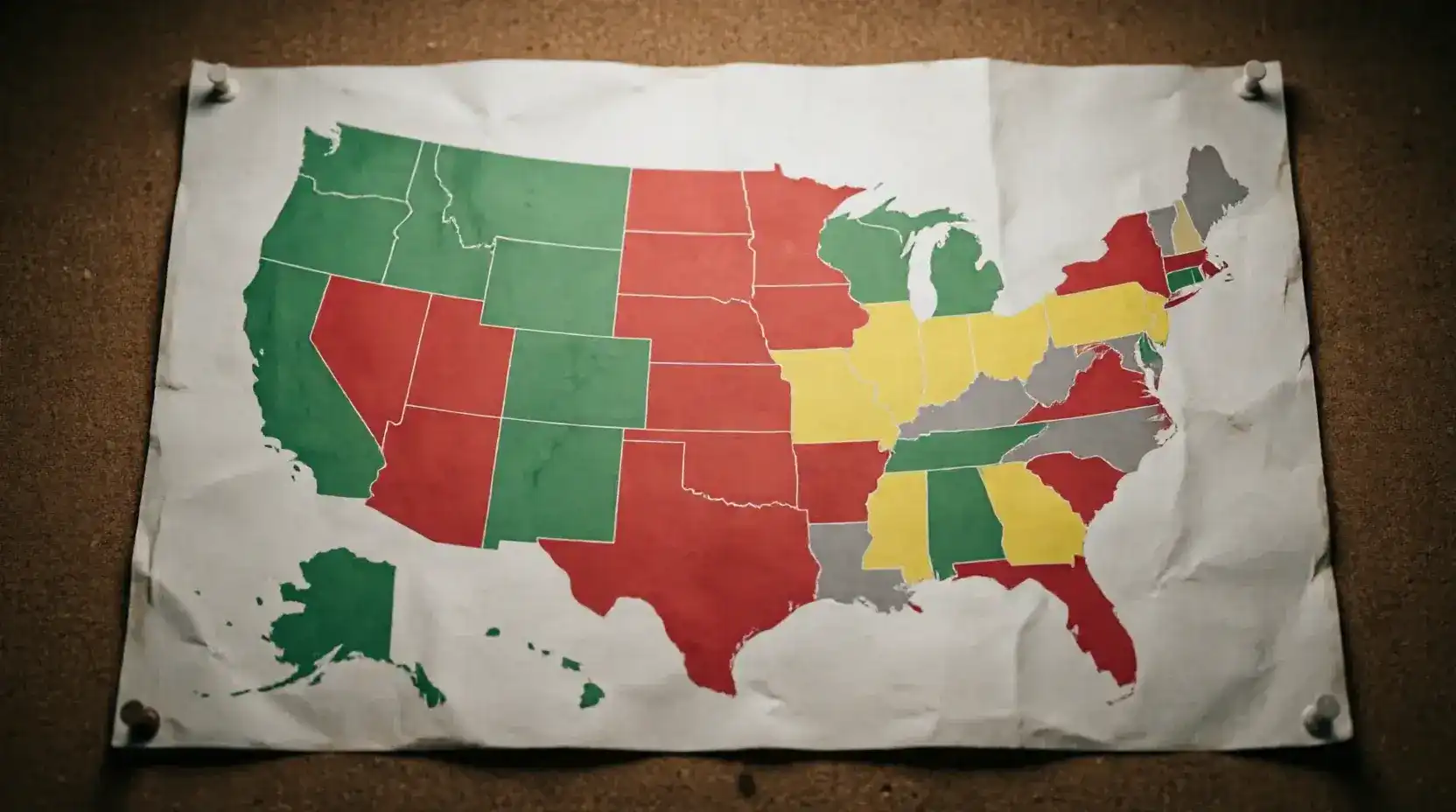
I’ve watched this map change more in the past two years than in the decade before. When I started tracking the legal landscape of sweepstakes casinos, the question of which states allowed them barely registered as a legal issue — most states hadn’t thought hard enough about them to form a policy. That’s no longer true. As of April 2026, 13 states have enacted laws that prevent sweepstakes casinos from legally operating, and the pace of legislative activity has accelerated sharply. Six states passed bans in 2025 alone. Six others introduced similar legislation and failed. That 50/50 split on attempts tells you the political pressure is real, but so is the resistance.
The default position, absent a specific state ban, is that sweepstakes casinos operate legally under the federal promotional sweepstakes framework. Operators don’t require state gambling licenses because they’ve structured their platforms as promotional sweepstakes rather than gambling. Most states haven’t yet moved to override that framework. But “haven’t yet moved” is not the same as “will never move,” and anyone using these platforms should understand exactly which category their state currently occupies.
States Where Sweepstakes Casinos Are Fully Legal (2026)
Thirty-seven states currently fall into the “open” category — meaning no specific legislation prohibits sweepstakes casinos from operating under the federal promotional framework. Major states in this group include Texas, Florida, Ohio, Pennsylvania, Illinois, Michigan, Colorado, Arizona, Tennessee (post-enforcement wave notwithstanding, more on that below), and most of the South and Midwest.
A few clarifications on what “fully legal” means here. It means the platform can operate and accept players from these states. It doesn’t mean the state has issued a formal opinion endorsing sweepstakes casinos, approved them through a regulatory body, or done anything other than simply not passing legislation against them. The legal basis is the absence of prohibition, not the presence of authorization.
American Gaming Association data shows that monthly active player numbers in states with unrestricted access are roughly double those in states where access is limited or restricted. That metric reflects both the availability of platforms in open states and the chilling effect that legal ambiguity or partial restrictions have on player participation. Players who know they’re in a clean legal environment participate more freely.
Texas deserves a special mention because of its size. It’s one of the largest sweepstakes casino markets in the country by raw player count, has no state-level online gambling infrastructure to compete with sweepstakes platforms, and hasn’t produced meaningful legislative opposition. Florida is similar — large population, no regulated online casino market, and sweepstakes casinos filling a gap that licensed operators can’t legally occupy. These two states alone represent a substantial portion of overall US sweepstakes activity.
Ohio and Michigan present an interesting contrast: both have launched regulated online casino markets. You’d expect sweepstakes casinos to be less relevant where real-money licensed platforms are available, and there’s some evidence for that in player distribution. But sweepstakes platforms continue to attract players in both states, particularly those who don’t want to deposit real money or who prefer the free-play structure for casual sessions. Legal regulated gaming and sweepstakes casinos have proven to coexist rather than one fully displacing the other.
Colorado and Arizona both have sports betting and some form of regulated gaming, yet sweepstakes platforms remain popular and legally unimpeded. The same pattern holds across most of the Mountain West. Pennsylvania is notable as a state with a robust licensed iGaming market — online slots, table games, poker, all regulated — and yet sweepstakes casino use remains significant. The audiences overlap but aren’t identical.
Washington state and Oregon in the Pacific Northwest offer an interesting pair to examine. Washington has been among the most aggressive enforcers — the High 5 Games settlement is the clearest example — while Oregon has largely left sweepstakes operators alone despite having its own tribal gaming compacts and strong regulated gambling interests. The difference comes down to legislative and AG priorities, not the platforms themselves. The same platform, same architecture, operates freely in Oregon while drawing enforcement in Washington. That inconsistency is a feature of the current patchwork environment, not a bug that will resolve on its own.
The South broadly remains favorable territory, with the exception of specific states that have moved against the model. Alabama, Arkansas, Louisiana, Mississippi, South Carolina, and Georgia are all open states as of 2026 — none have passed sweepstakes casino restrictions, and legislative activity in these states has been minimal. The Deep South’s complicated relationship with gambling regulation has, somewhat paradoxically, created an environment where sweepstakes casinos face less opposition than in states with more developed regulated gaming infrastructure. Where there’s no established gambling industry lobbying against them, sweepstakes casinos encounter less organized political resistance.
For players in open states, the practical takeaway is that your legal exposure as an individual player is essentially zero. You’re participating in a promotional sweepstakes, same as entering a Publisher’s Clearinghouse sweepstakes or a McDonald’s Monopoly game. The operator is the entity with legal skin in the game, not you.

States Where Sweepstakes Casinos Are Banned
Thirteen states have enacted legislation that prevents sweepstakes casinos from operating as of April 2026. The list: New York, California (pending enforcement as of this writing), Washington state, Montana, Kentucky, Tennessee (complex enforcement situation, covered below), Nevada, New Jersey, Connecticut, Hawaii, Utah, and Idaho. I should address one common confusion here: Michigan is not on this list despite having a regulated online casino market. Sweepstakes casinos operate legally in Michigan. The existence of a regulated iGaming market doesn’t automatically ban sweepstakes platforms; Michigan’s legislature has not passed specific sweepstakes casino restrictions. The enforcement status across banned states varies — some have active penalties, others have legislation on the books with limited enforcement action to date.
Let me be precise about this list because misinformation circulates widely. Washington state has been actively hostile and has extracted real penalties — High 5 Games paid $24.9 million in Washington to settle enforcement actions related to sweepstakes casino operations. Connecticut followed with a $1.5 million settlement from the same operator. Those are not symbolic fines. Nevada has long-standing gambling laws comprehensive enough to effectively prohibit the model. New York’s S5935A is the strictest dedicated sweepstakes casino law in the country.
In 2025, six states added themselves to the prohibition list. The pattern across these legislative actions is similar: the states argue that sweepstakes casinos function as de facto gambling regardless of their legal structure, that they’re operating without consumer protections required of licensed operators, and that the federal promotional framework was designed for genuinely promotional activities — cereal-box contests — not persistent for-profit gaming platforms. None of those arguments are legally settled, but they’ve been sufficient to pass legislation in six state houses.
For players currently in banned states: if you’re in a state where sweepstakes casinos are legally prohibited, the platforms themselves should be blocking access based on geolocation. Most operators have geofencing in place precisely to avoid players in prohibited states from accessing the service. If you’re using a VPN or otherwise circumventing geolocation blocks, you’re creating legal exposure for yourself — as a participant in a prohibited activity in your state, even if you’re not the regulated entity. My strong advice is not to do this.
What happens to balances when a state bans? This is the question I get asked most often by players in states that have recently restricted access. The answer depends on the operator and the specific ban structure. Most platforms have made good on existing SC balances for players in states that added restrictions — typically a grace period window of 30 to 90 days during which players could redeem outstanding balances before account closure. But that’s a policy decision by the operator, not a legal guarantee. There’s no universal rule requiring platforms to honor balances for players in newly restricted states. Reading the operator’s terms around account closure in restricted states before you build a significant SC balance is worth doing.
States in the Grey Zone: Restricted or Under Review
A handful of states occupy uncertain territory — they haven’t passed specific sweepstakes casino legislation, but circumstances complicate the “fully open” designation. California is the most consequential example.
California represents the single largest sweepstakes casino market in the country. EKG estimated California purchases at $2.42 billion in 2025 — approximately 17.3% of the entire US sweepstakes market. The state has active legislation aimed at restricting or banning the model, and while it hadn’t passed as of this writing, the legal risk for operators serving California is higher than in most open states. Some platforms have chosen to exit California proactively, ahead of any formal ban, rather than risk enforcement. Others continue to operate and are watching the legislative calendar closely.
Tennessee is another complicated case. Attorney General Jonathan Skrmetti sent cease-and-desist orders to approximately 40 sweepstakes casino operators in December 2025, and nearly all complied within 30 days. But the enforcement action wasn’t backed by specific legislation at the time — it was a regulatory interpretation of existing gambling law. The legal status in Tennessee remains contested; some operators re-entered after the initial cease-and-desist wave once the legal picture became clearer, while others have stayed out. Players in Tennessee should check their preferred platform’s current accessibility rather than assuming.
Other grey-zone states include those where specific tribal gaming compacts create complications, where state attorneys general have issued informal opinions about sweepstakes gaming without formal legislation, or where pending bills have introduced uncertainty without yet changing the law. Indiana, Maryland, and Illinois have all seen sweepstakes-related legislative activity in recent sessions without definitive resolution.
New York’s situation under S5935A deserves separate treatment because the law is specific, aggressive, and has broad liability scope — which makes it the model that other states’ legislators are increasingly referencing when drafting their own bills.
New York S5935A: The Strictest Sweepstakes Law in the Country
S5935A passed in 2024 and represents the most comprehensive state-level assault on the sweepstakes casino model yet enacted. It doesn’t just ban the platforms — it creates a liability chain that reaches well beyond the primary operator.
Under S5935A, penalties range from $10,000 to $100,000 per violation. But the novel element is who counts as a violator: the law extends liability to the operators themselves, payment processors who facilitate transactions, geolocation services that help platforms verify player locations, and marketing affiliates who promote restricted platforms to New York residents. That last category is particularly significant for the broader sweepstakes casino ecosystem — it means that affiliate sites, comparison platforms, and publishers who send New York traffic to sweepstakes casinos are potentially liable under the law.
Howard Glaser, director of government affairs at Light & Wonder and a longtime critic of the sweepstakes casino model, called the landscape a “fast-growing scheme of dubious legality” in a 2024 paper that helped inform the regulatory conversation in New York and several other states. Whether you agree with that characterization or not, his framing was politically effective — S5935A passed with bipartisan support.
For players in New York: your personal legal exposure as an individual player isn’t the focus of S5935A, which is aimed at operators and their supply chain. But any New York-based player building a balance on a sweepstakes platform that continues operating in the state despite the ban is taking on some risk around balance recovery if the platform is forced to exit. The platforms that have respected S5935A have blocked New York players entirely; the ones still accessible in New York are operating in violation of state law, which creates redemption uncertainty for any balances you hold.
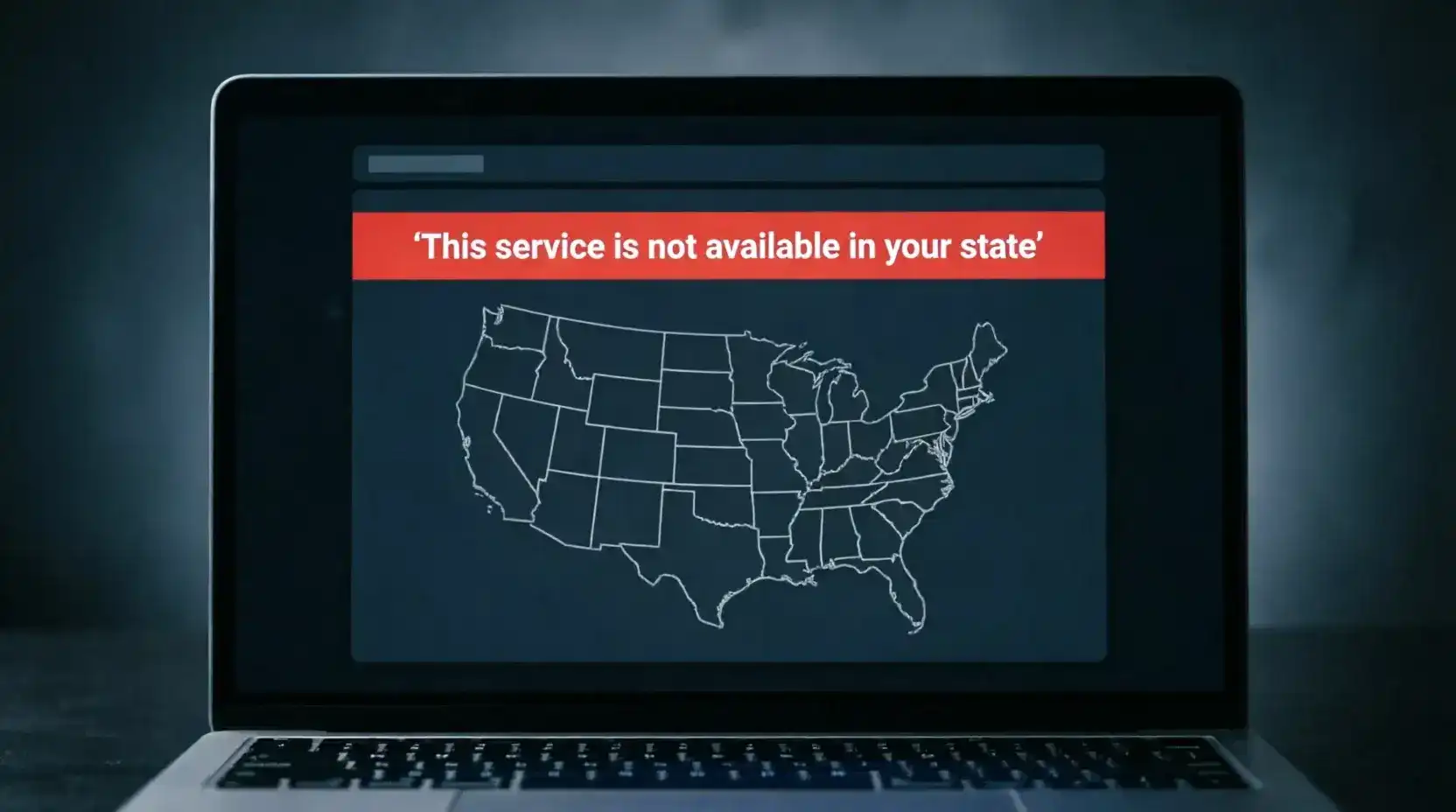
S5935A has become the template. Multiple states considering sweepstakes casino legislation have directly referenced its liability-chain structure. For more detail on the law’s specific provisions and impact, the dedicated analysis is at  the New York sweepstakes casino ban guide.
Tennessee’s Cease-and-Desist Wave: A Case Study in State Enforcement
Tennessee’s December 2025 enforcement action is worth studying in detail because it shows what state-level action looks like short of dedicated legislation — and why the approach produced mixed results.
Attorney General Jonathan Skrmetti identified approximately 40 sweepstakes casino operators and sent formal cease-and-desist letters in a single coordinated action on December 29, 2025. The letters argued that the platforms’ activities constituted illegal gambling under existing Tennessee law, regardless of their sweepstakes structure. The timing — between Christmas and New Year’s — was deliberate; it created maximum disruption with minimum media attention.
The response was striking: nearly all 40 operators complied within 30 days and blocked Tennessee access. That fast, near-universal compliance reflects the industry’s underlying vulnerability — operators building their legal defense around the “no purchase necessary” framework are still sensitive to a state AG’s determination that they’re operating illegally, even before any court rules on the matter. Litigation is expensive and creates regulatory uncertainty that disrupts operations. Compliance was the path of least resistance.
But the story didn’t end there. Several operators re-entered Tennessee after consulting with legal counsel and determining that the AG’s interpretation wasn’t supported by Tennessee’s existing gambling statutes as written. As of mid-2026, the situation in Tennessee remains unresolved — some platforms are accessible, some are not, and there’s no definitive court ruling or dedicated legislation that settles the question either way.
What the Tennessee case demonstrates is that AG enforcement actions without dedicated legislation produce temporary rather than durable outcomes. States that want to genuinely restrict sweepstakes casinos long-term need specific legislation — vague application of existing gambling statutes is litigable and has produced inconsistent results across multiple states. The operators that survived and returned to Tennessee did so because they had legal analysis supporting their position, not because the AG was wrong to try.
How State Laws Against Sweepstakes Casinos Are Evolving in 2026
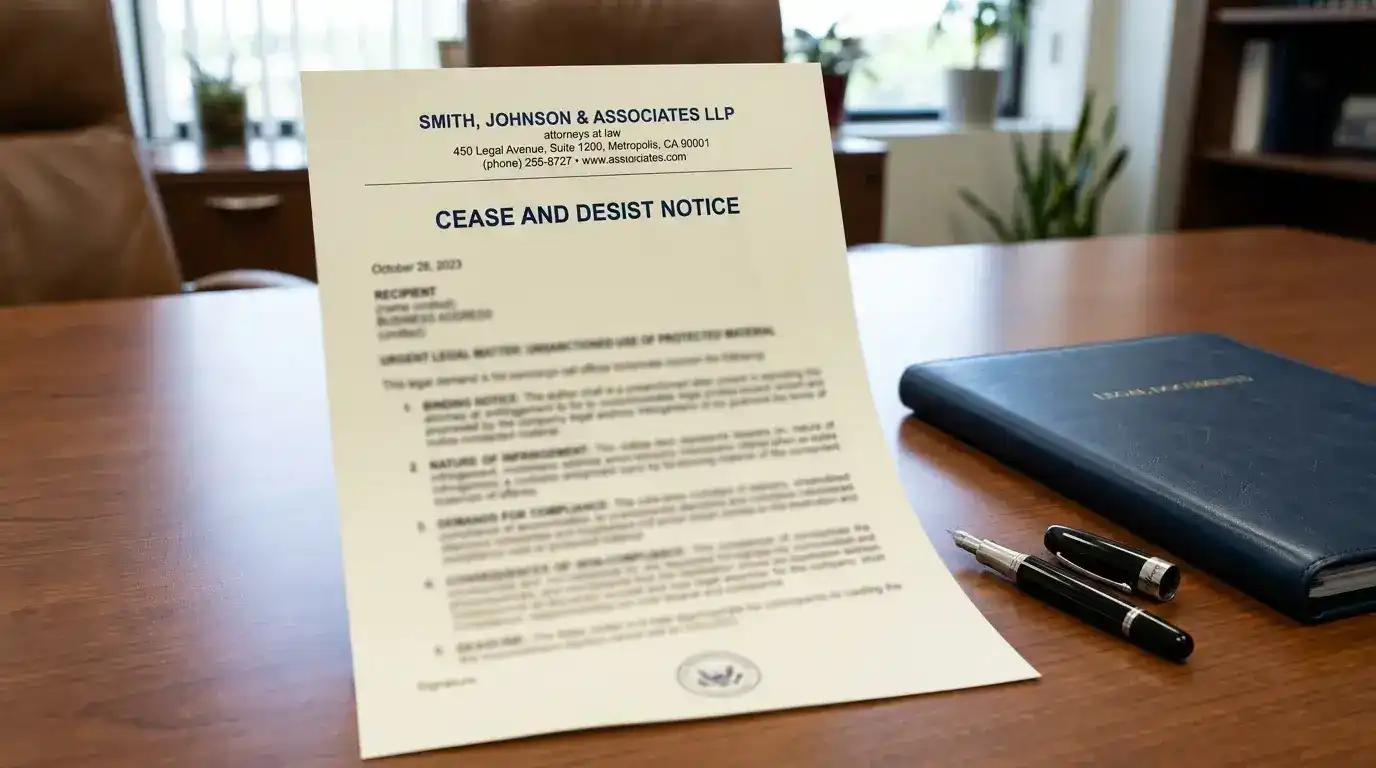
The legislative pattern emerging from 2025 is instructive. Six states passed bans; six others tried and failed. The successful bans share certain characteristics: specific dedicated legislation rather than interpretation of existing gambling laws, liability chains that go beyond operators to payments and marketing, and regulatory findings based on player behavior research rather than pure legal theory.
The AGA’s player survey data — showing that 90% of sweepstakes casino users consider themselves to be gambling, and 69% describe these platforms as places to bet real money — has become a central exhibit in state legislative hearings. Legislators arguing for bans point to this data as evidence that the “promotional sweepstakes” classification is a legal fiction that deceives consumers rather than an accurate description of how players experience these platforms. That argument has proven persuasive in more than a dozen legislative chambers.
The failure side is equally telling. Six states attempted bans and didn’t get them through. In several cases, opposition came from operators arguing economic disruption — the scale of the sweepstakes market makes the “just ban it” approach politically costly when representatives from districts with significant player bases consider the implications. In California specifically, the $2.42 billion market size has been a significant factor in the legislative calculus. Banning a market that large has visible economic consequences that legislators aren’t always willing to absorb.
The trend for 2026 and 2027 points toward continued expansion of the banned state list, but at a pace constrained by political economy. My estimate, based on watching the legislative pipeline, is that between two and five additional states will pass specific sweepstakes casino restrictions by the end of 2027. The states most likely to move are those with active legislative proposals, strong tribal gaming lobbies that compete with sweepstakes platforms, or attorneys general who have publicly indicated interest in enforcement action.
For players, the practical implication is clear: the legal map is not static. A platform that works in your state today might be blocked in 12 to 18 months if your state legislature acts. The way to manage this is not to avoid sweepstakes casinos, but to avoid building large unredeemed SC balances if you’re in a state with visible legislative risk. Keep your redemption cadence regular rather than letting balances accumulate over months.
Frequently Asked Questions
The full picture is in our complete guide to US sweepstakes casinos.
The state-by-state record over time: the regulatory timeline.
Written by the editors at SweepEdge.